多米尼克 – 卡布里凱賓斯基度假酒店建築進度






多米尼克 – 卡布里凱賓斯基度假酒店建築進度

Government of Canada Eliminates Conditional Permanent Residence for Spouses and Partners
News Release
From Immigration, Refugees and Citizenship Canada
April 28, 2017—Ottawa, ON – To uphold its commitment to family reunification and to support gender equality, the Government of Canada has removed the condition that applied to some sponsored spouses or partners of Canadian citizens and permanent residents to live with their sponsor for two years in order to keep their permanent resident status.
This change applies to anyone who was subject to the requirement, as well as to new spouses and partners who are sponsored as permanent residents.
Eliminating conditional permanent residence supports the Government’s commitment to gender equality and to combat gender violence. The regulatory change addresses concerns that vulnerable sponsored spouses or partners may stay in abusive relationships because they are afraid of losing their permanent resident status even though an exception to the condition existed for those types of situations.
The Government of Canada does not want any sponsored spouse or partner who is in an abusive situation to remain in it for fear of losing their status in Canada.
The change also supports family reunification, which is a key immigration commitment of the Government of Canada. Removing the condition recognizes that the majority of marriages are genuine and most spousal sponsorship applications are made in good faith.
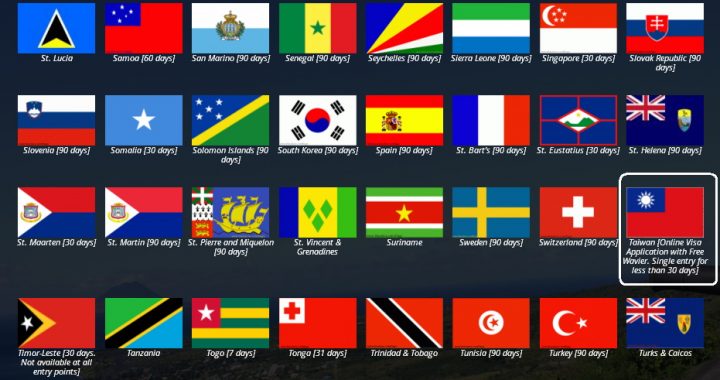
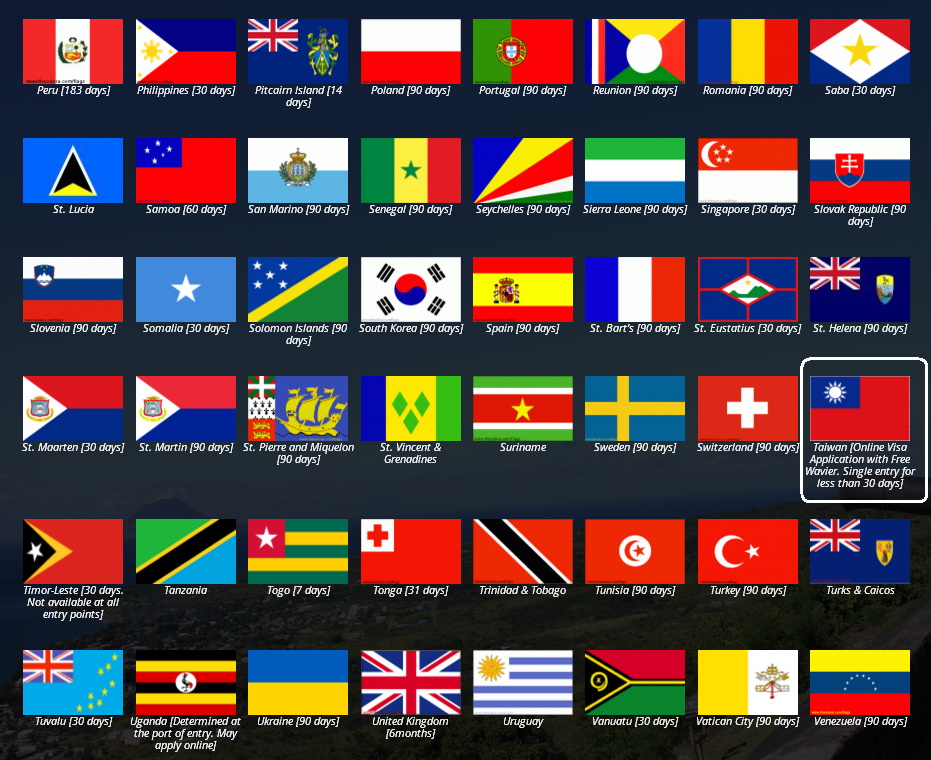
聖基茨護照持有人現在可以免簽證到155個國家,包括台灣。
台灣:在線簽證申請,豁免費用。單次入境時間少於30天。


US busts fraudulent US$50m investor migration scheme for rich Chinese, including fugitives
Federal agents in California on Wednesday raided two homes and a business allegedly connected to a US$50 million visa fraud scheme that benefited up to 100 Chinese nationals.
Authorities said the key suspects in the case helped wealthy Chinese obtain residency visas in the United States in exchange for bogus investments.
According to an affidavit by an FBI agent involved in the probe, Victoria Chan, a California attorney, and her father, Tat Chan, beginning in 2008 convinced more than 100 Chinese nationals to invest upwards of US$50 million in the California Investment Immigration Fund (CIIF) and related companies in order to obtain visas under the so-called EB-5 program.
The programme offers foreign nationals permanent US residency – commonly known as a green card – in exchange for investments of at least US$500,000 in a US business that must also create 10 American jobs.
“As a result of the fraudulent scheme, many foreign nationals were able to improperly obtain US green cards through the EB-5 visa program, even though those foreigners did not in fact truly invest in US businesses, nor were new American jobs created,” FBI special agent Gary Chen wrote in the affidavit.
Chen said three of those who benefitted from the programme were fugitives on China’s 100 most wanted list, charged with crimes such as bribery and abuse of power.
Victoria Chan and her father allegedly promised investors a full refund on their funds but kept some of the money to buy multi-million-dollar homes for themselves and for Tat Chan’s female companion, Fang Zeng, a Chinese national.
They also submitted plans to federal authorities for various development projects that never got off the ground.
Officials said no arrests have been made yet in the case and no formal charges have been filed.
With the raids Wednesday, during which computers, banking records and other documents related to the alleged scheme are expected to be confiscated, investigators hope to begin to untangle the complicated case. They have yet to determine how many of the Chinese investors were complicit or victims in the alleged fraud, exactly how much money ring leaders actually raised and what has happened to the money.
The EB-5 program was created in 1990 to help stimulate the US economy through job creation and capital investment from foreign nationals.
Nearly 90 per cent of EB-5 visas were issued to Chinese nationals in 2014, when the programme reached its quota of 10,000 visas and had to stop accepting applications.
Concerns over poor oversight and some highly publicized scams led the North American Securities Administrators Association, an advocacy group, to label EB-5-related fraud as one of the top new threats to investors.

The construction Stage of the Park Hyatt Hotel in St. Kitts.


Please see below link for video tour.
Link: https://www.dropbox.com/s/l0bre6gc4rxby9s/Park%20Hyatt%2018%20April%202017.wmv?dl=0
特恩布林宣佈澳洲頒佈更嚴謹的公民法
此外,申請者需以永居身份在澳洲住滿四年才可以申請入籍,比目前住滿 12 個月多三年。譚保總理稱,澳洲公民身份是一種「特權」。
新措施僅容許申請者三次機會通過入籍測試,三次不通過要等兩年重試。
新措施今日起生效。今年稍後由國會通過修正案,追溯所有今天起的新申請。

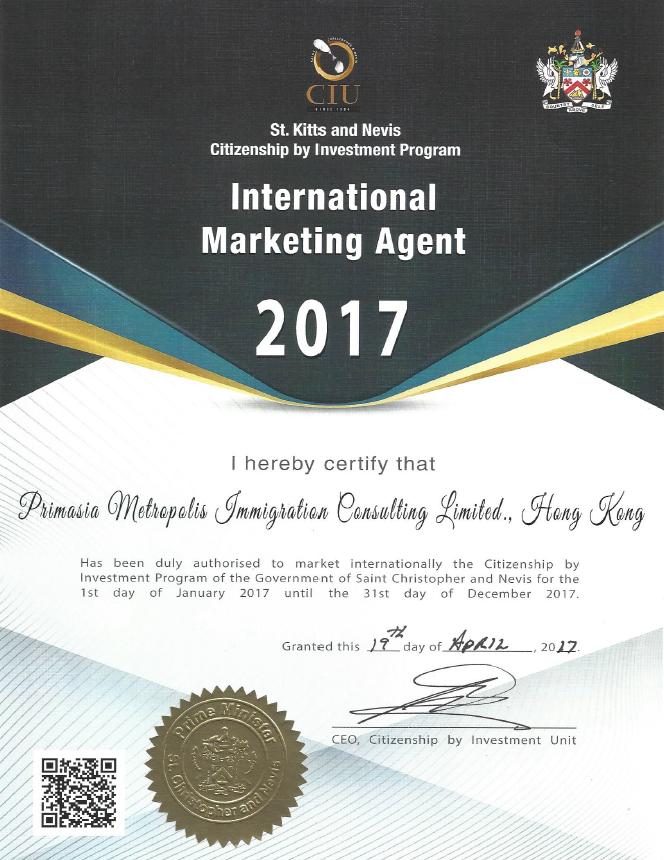

首都投資移民顧問有限公司現已成為聖基茨及尼維斯公民投資申請的8個國際營銷代理商之一。
Link: http://www.ciu.gov.kn/agents/international-marketing-agents/

Subtle but key differences in Caribbean citizenship programmes (updated on 23032017)
By Caribbean News Now contributor
MIAMI, USA — It is often tempting to lump together the five citizenship by investment (CBI) programmes of the Eastern Caribbean, with investors assuming that the only difference is the reputation of the island or the price of the passport. This is clearly not the case. While they often share many similarities, not all are created equal.
For example:
1. Saint Lucia citizenship cannot be passed down to future generations, but is limited to the applicants at the time the application is made – so it is not true citizenship, more like residency. This is not the case in Dominica, where full citizenship is passed from parent to child indefinitely.
2. St Kitts and Nevis’s big advantage, shared by Saint Lucia, is that it does not maintain diplomatic relations with China, preferring many years ago to partner with Taiwan instead. As a result, the Chinese love these passports as they feel safer with the Taiwanese. This is an important issue with Antigua and Barbuda, which is very close to China – it built the Sir Vivian Richards cricket stadium among other things – so there is always a perceived risk for Chinese investors that their new citizenship will be revealed to their home government.
3. Dominica and St Kitts and Nevis’s other big advantage is that real estate can be sold after five years to investors who can also use the same piece of real estate to apply for CBI. This is not the case with Antigua and Barbuda or Grenada. In the case of the former, it can only be resold (if the applicant wishes to keep the passport), the project is complete and given progress to date.
4. Grenada’s much-touted selling point is its E-2 investor visa treaty with the United States. The E-2 investor visa allows an individual to enter and work in the US based on an investment he or she will be controlling. This visa must generally be renewed every two years, but there is no limit to how many times one can renew. The investment must be “substantial”. Investor visas are available only to citizens of certain countries, including Grenada. However, applicants must hold a Grenadian passport to apply for this visa but, in order for the E-2 visa to be granted, applicants first have to visit the US embassy in Bridgetown, Barbados, and explain their business plan. Officials there are said to baulk at any applicant, who, though they might be holding a Grenadian passport, does not look Grenadian.
Link : http://www.caribbeannewsnow.com/headline-Subtle-but-key-differences-in-Caribbean-citizenship-programmes-33872.html